Skip to content
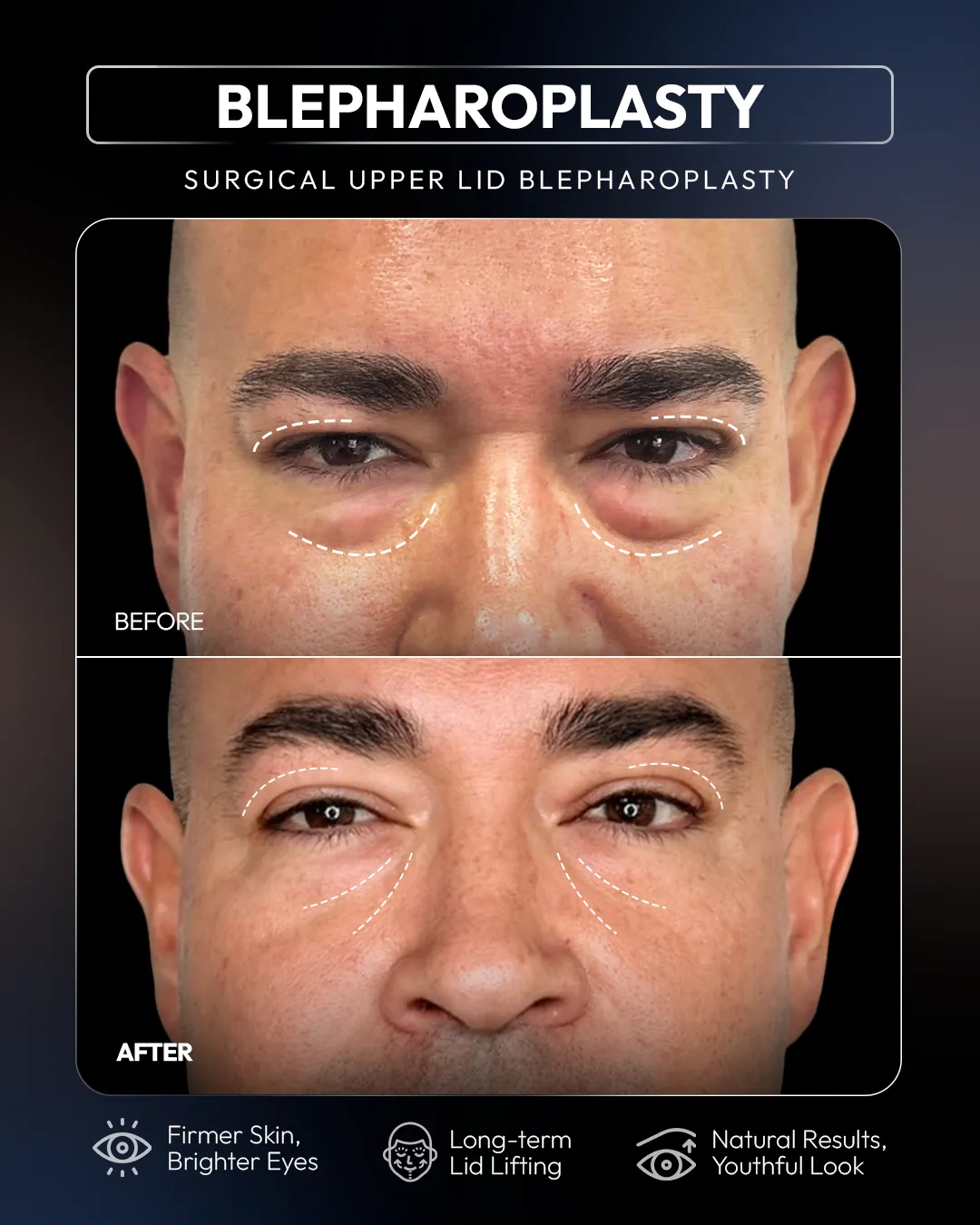
Table of Contents
Tired-looking eyes are not always caused by a lack of sleep, as loose upper eyelid skin, puffiness, and under-eye bags can create a fatigued appearance that persists throughout the day. Surgical blepharoplasty addresses these structural changes by removing or repositioning excess skin and fat around the upper or lower eyelids. With a carefully planned approach, eyelid surgery can create a more rested, refreshed appearance while preserving the natural character of your eyes.
How long do blepharoplasty results last?
Blepharoplasty results can be long-lasting, although the skin and tissues around the eyes will continue to change with natural aging.
Why Eyes Can Start to Look Tired Over Time
The skin around the eyes is thin and delicate, making age-related changes especially noticeable in this area. Skin gradually loses elasticity, while the muscles and supporting tissues around the eyelids can weaken. Fat may also shift or become more prominent.
These changes do not look the same on everyone. Some people develop droopy eyelids or folds of excess eyelid skin along the upper lids. Others notice persistent under-eye bags, puffiness, or loose lower-eyelid skin.
Genetics can also play a role. Eyelid heaviness or prominent under-eye bags may appear earlier in adulthood for some people, meaning the concern is not necessarily tied to advanced age.
The result can be a mismatch between how you feel and how your eyes appear. Surgical blepharoplasty focuses on the physical changes contributing to that appearance rather than trying to alter the overall shape or expression of the face.
How Surgical Blepharoplasty Addresses the Eyelids
Blepharoplasty is a surgical procedure that modifies skin, fat, and sometimes muscle around the eyelids. The exact approach depends on the anatomy of the eye area and the concerns a patient wants to address.
Upper eyelid surgery generally focuses on loose or excess skin that creates a heavy appearance above the eyes. When appropriate, excess or protruding fat may also be addressed.
Lower eyelid surgery is commonly performed to improve puffiness, prominent fat pockets, loose skin, or under-eye bags. Fat may be removed or repositioned depending on the patient’s needs and the surgical plan.
Some patients have concerns involving both areas. In those cases, upper and lower blepharoplasty may be considered together after an evaluation.
The goal of treatment planning is not to make every eye look the same. A careful approach takes existing eyelid structure, facial proportions, skin quality, and individual concerns into account.
5 Changes Blepharoplasty Can Make Around Tired-Looking Eyes
People often associate eyelid rejuvenation with simply removing loose skin, but several different changes may contribute to a more rested appearance.
1. Reduce Heavy Upper Eyelid Skin
Loose skin can fold over the natural upper-eyelid crease and make the eyes appear heavier. Removing an appropriate amount of excess skin can create a cleaner, less weighed-down upper eyelid.
2. Address Persistent Under-Eye Bags
Under-eye bags caused by prominent or displaced fat may remain noticeable regardless of sleep, hydration, or skin care. Lower eyelid surgery can address these fat pockets directly.
3. Improve Lower-Eyelid Puffiness
Fullness beneath the eyes can create shadows that contribute to a fatigued appearance. Depending on the patient’s anatomy, fat can be removed or repositioned to create a smoother transition in the lower-eye area.
4. Reduce Loose or Crepey Eyelid Skin
Changes in skin elasticity can cause fine folds and laxity around the eyelids. Blepharoplasty may remove selected excess skin when it is appropriate to do so.
5. Create a More Rested Appearance Without Changing Your Identity
Thoughtful eyelid surgery is intended to address specific age-related or structural concerns while respecting the natural shape of the eyes. The aim is improvement in the features causing concern, not an entirely different expression.
What Blepharoplasty Cannot Address
Understanding the limitations of surgery is just as important as knowing what it can improve.
Blepharoplasty does not treat every wrinkle, dark circle, hollow, or pigmentation concern around the eyes. For example, discoloration beneath the eyes may be related to skin pigmentation or visible blood vessels rather than excess skin or fat.
Fine lines around the outer corners of the eyes may also remain after surgery because they are influenced by facial movement and skin quality.
This distinction matters when planning treatment. A consultation can help determine which concerns are related to eyelid anatomy and which may respond better to skin treatments, injectables, or another approach.
What to Expect From Blepharoplasty Recovery and Results
Some swelling and bruising are expected during blepharoplasty recovery, particularly in the early stages after surgery. The amount and duration can vary depending on the extent of the procedure and individual healing.
Incisions for upper blepharoplasty are typically positioned within the natural eyelid crease. Lower-eyelid incision placement can vary according to the surgical technique used and the tissues being addressed.
As healing progresses, swelling generally decreases and the eye area begins to settle. Incision lines also change with time as scars mature. Patients should follow their provider’s postoperative instructions closely, including guidance about activity, incision care, medications, and follow-up appointments.
Final blepharoplasty results are not immediate. Allowing the tissues sufficient time to heal provides a more accurate view of the eventual outcome.
Who May Consider Surgical Blepharoplasty?
Blepharoplasty may be worth discussing if excess upper-eyelid skin, lower-eyelid puffiness, or under-eye bags remain bothersome despite changes in sleep or skin care.
Candidacy is not based on age alone. Eyelid anatomy, skin condition, general health, medical history, expectations, and the specific concern all influence treatment decisions.
Because the procedure involves a delicate area of the face, an individualized assessment is important. It allows the provider to evaluate what is creating the tired appearance and determine if surgery is an appropriate option.
Mederna Aesthetic Medicine Surgical Blepharoplasty in Houston, TX
For patients considering blepharoplasty in Houston, TX, Mederna Aesthetic Medicine provides physician-led aesthetic care with treatment planning based on individual features and goals.
Located in Houston, Mederna Aesthetic Medicine combines medical expertise, aesthetic technology, and personalized care across surgical and nonsurgical services. Our team considers facial structure and the specific eyelid changes a patient would like addressed before recommending a treatment plan.
Our approach to surgical blepharoplasty centers on precision and respect for your natural features. Instead of approaching eyelid concerns in isolation, our team considers how the eye area relates to the surrounding facial anatomy and what degree of correction is appropriate.
Schedule a consultation with Mederna Aesthetic Medicine. Learn if surgical blepharoplasty is appropriate for your eyelid concerns.
Frequently Asked Questions
Can blepharoplasty get rid of under-eye bags?
Lower eyelid surgery can address under-eye bags caused by prominent or displaced fat and may also address excess skin when appropriate.
Does surgical blepharoplasty change the shape of your eyes?
Blepharoplasty is generally planned to address excess skin, fat, or other eyelid concerns while preserving the patient’s natural eye characteristics.
How long does it take to recover from eyelid surgery?
The initial blepharoplasty recovery period often involves swelling and bruising, but individual healing time varies according to the procedure performed and other patient-specific factors.