Skip to content
Table of Contents
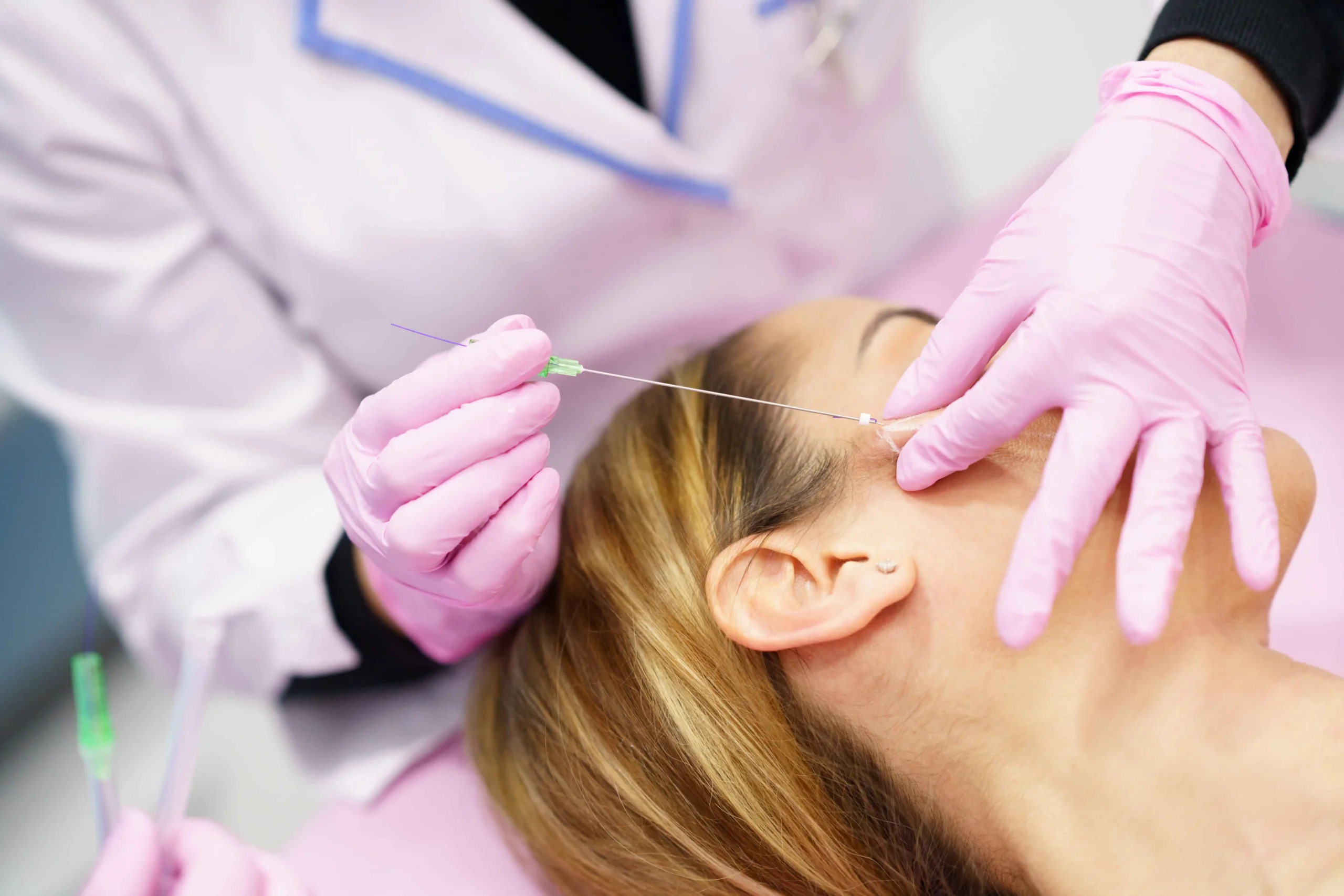
If you have started noticing a little softness along your jawline or neck, you are not imagining it. Skin changes with age, and one of the quieter reasons is collagen, the protein that keeps skin firm and supported. PDO threads work with that process rather than around it. They are placed beneath the skin and, over the following months, prompt your body to build new collagen where they sit. At Mederna Aesthetic Medicine in Houston, TX, this is one of the treatments we use to support skin firmness without surgery.
This post walks through what that actually means: what the threads are, how they encourage collagen, and what “over time” really looks like, so you know what to expect.
How Do PDO Threads Help Your Skin Build More Collagen?
PDO threads are dissolvable sutures placed beneath the skin, and your body responds to them the way it responds to any healing cue by activating fibroblasts, the cells responsible for producing collagen. As those cells get to work, new collagen forms along the path where the thread was placed, gradually reinforcing the skin’s underlying structure from within. The threads themselves dissolve over a period of months, but the collagen they prompted stays behind and does the longer-term work of supporting firmness.
What PDO Threads Actually Are
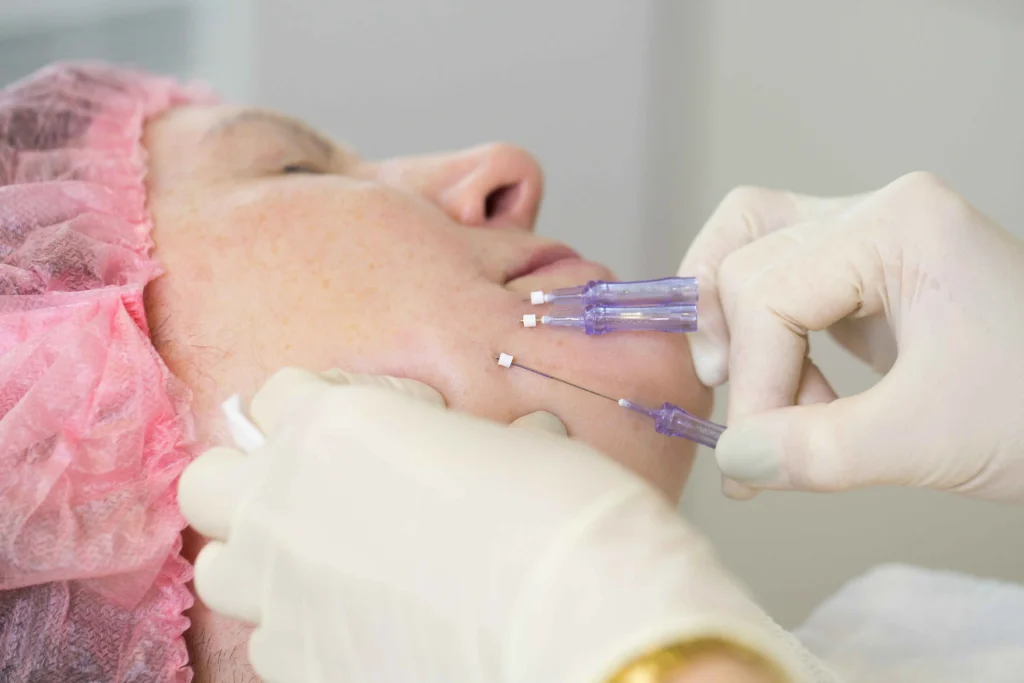
PDO threads are dissolvable sutures made from polydioxanone, a material used safely in surgery for decades. That track record matters, because it means your body already knows how to absorb it without trouble. This is not a new or experimental substance being repurposed.
What makes a PDO thread lift different from a cream or serum is placement. These threads go beneath the skin, not on top of it. A topical product can only do so much from the surface, while a thread sits in the layer where structural support actually lives. That is why this approach can address laxity that skincare alone cannot reach.
Here is the part worth holding onto for the rest of this article. PDO threads do two separate things at once:
- An immediate support effect, from the thread physically lifting and holding the tissue right after placement.
- A slower collagen-building process, which unfolds quietly over the following months.
People often blur these two together, so it helps to keep them mentally separate as we go.
How PDO Threads Trigger Collagen Production
The collagen response is the heart of how this treatment works. When a thread is placed beneath the skin, your body recognizes it and responds the way it responds to any healing cue. That response activates fibroblasts, the cells in your skin responsible for producing collagen. In plain terms, the thread gives your body a gentle reason to start rebuilding in that exact spot.
As those fibroblasts get to work, new collagen forms along the path where the thread was placed, gradually reinforcing the skin’s underlying structure from within. It is a focused process, concentrated where the thread sits rather than spread thinly across the whole face.
This is a controlled, low-level response, not an injury in any harmful sense. Your skin is constantly maintaining and renewing itself, and this collagen stimulation treatment simply nudges that natural maintenance to happen where you want a little more support. The threads work with your biology, not against it.
What Supporting Collagen Over Time Looks Like Month by Month
This is where the “over time” part becomes important, because PDO threads are not an overnight fix and were never meant to be. The threads themselves dissolve over a period of months. What stays behind is the collagen they prompted your body to create, and that is the part doing the longer-term work.
The timeline tends to unfold in two phases:
- Early on, much of what you notice comes from the thread’s mechanical support, the physical lift right after placement.
- As the threads dissolve, the newer collagen gradually takes over as the source of firmness and structure.
In a sense, one effect hands off to the other. It is worth being honest, though: results build gradually and vary quite a bit from person to person. Your age, your skin’s condition, and how actively your body produces collagen all influence what you will see and how long it lasts. This is skin tightening that depends on your own biology, so there is no single fixed promise that applies to everyone. What your provider can offer is a realistic sense of what is likely for your skin specifically.
What Healthy Collagen Does for the Skin
To understand why any of this matters, it helps to know what collagen does in the first place. Collagen is the structural protein that gives skin its firmness, bounce, and support. When you are younger, you have plenty of it, which is part of why younger skin looks taut and springs back easily.
The catch is that collagen naturally declines with age. As those levels drop, skin loses some of its internal scaffolding, and that loss of support is a major contributor to the laxity many people notice along the jawline, neck, and lower face. It is not about doing anything wrong with your skincare. It is simply biology.
This is exactly why a treatment that supports collagen is meaningful. By prompting your skin to rebuild some of that structural support, PDO threads address one of the underlying reasons skin softens over time rather than only masking the surface. This kind of facial rejuvenation treatment works at the level where the change is actually happening.
Who PDO Threads Tend to Suit
PDO threads are generally a good fit for people dealing with mild to moderate skin laxity in the face, neck, or jawline. If you are noticing early softening and want support without surgery, this non-surgical facelift approach is often well suited to that stage.
That said, honesty matters more than enthusiasm here. PDO threads are not a substitute for surgery when laxity is significant. If skin has lost a great deal of its support, threads can only do so much, and a surgical option may be the more appropriate path. A good provider will tell you that directly rather than overselling what threads can deliver.
Because the collagen response and skin condition differ so much from one person to the next, suitability is really something that gets determined in a consultation, where someone can look at your skin, understand your goals, and tell you honestly whether PDO threads make sense for you.
Ready to See If PDO Threads Are Right for You?
If you have been curious about how to support your skin’s natural firmness without surgery, we would be glad to talk it through. At Mederna Aesthetic Medicine in Houston, TX, our team will look at your skin honestly, explain what PDO threads can realistically do for you, and help you decide whether this treatment fits your goals.
Ready to boost collagen and achieve firmer, lifted skin naturally? Book your PDO thread lift consultation in Houston, TX, today and discover a non-surgical approach to long-lasting skin rejuvenation.